Hand Anatomy for Beginners: A Comprehensive Guide
Your hands: instruments of precision, tools of creation, vessels of expression. They effortlessly perform tasks ranging from the surgeon's delicate incision to the weightlifter's powerful grip. But how much do you really know about the amazing engineering that makes your hands so incredible? This guide will unlock the secrets of hand anatomy, explaining the complex structures in a clear, concise, and engaging way. We'll explore the bones, muscles, nerves, and ligaments that work in concert to give you such remarkable dexterity. Get ready to delve into the fascinating world of your hands! For a visual guide to hand parts, check out this helpful resource: Hand Parts.
Did you know that your hands contain 27 bones? That's a lot of intricate structure for such seemingly small appendages. This complex bone structure allows for the incredible range of motion and flexibility we take for granted.
The Skeletal Framework: Building Blocks of Dexterity
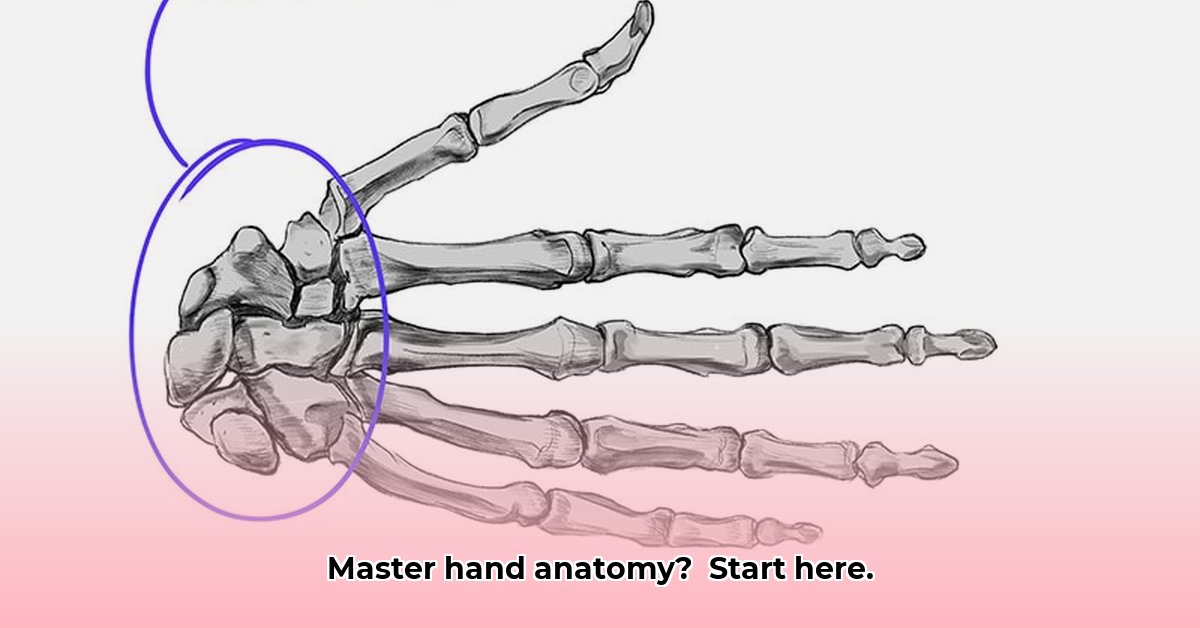
Your hand's skeletal marvel begins with the carpus (wrist), a foundation of eight small bones arranged in two rows. These tiny, uniquely shaped bones act like building blocks, forming a surprisingly strong yet flexible base for your hand's intricate movements. Connecting to the carpus are your forearm bones, the radius and ulna, completing the foundational structure. Moving distally are the five metacarpals, the longer bones that form the palm. Finally, there are the phalanges – fourteen in total! Your thumb possesses two, and each finger boasts three, contributing to your hand's remarkable versatility.
Muscles: The Power Behind Precision
Beyond the skeletal support lies the complex interplay of muscles, tendons, and ligaments. These structures are responsible for the precise and powerful movements your hands execute. Forearm muscles control larger movements like wrist flexion, while the intrinsic hand muscles—located within the hand itself—are responsible for the fine motor skills that make us human. Think of the thenar muscles in your thumb and the hypothenar muscles in your little finger; these allow for actions such as pinching a grain of rice or gripping a heavy tool with equal aplomb. The interossei and lumbricals facilitate the spreading and bending of your fingers, creating a coordinated and incredibly nuanced movement system.
“The intricate coordination of muscles in the hand is a testament to the body’s remarkable design.” says Dr. Eleanor Vance, Professor of Anatomy, University of California, San Francisco.
How many muscles do you think contribute to the delicate movements of your hand? The answer might surprise you. The number is significantly higher than you might assume, highlighting the complexity of this amazing structure.
The Nervous System: The Control Center
The incredible dexterity of your hand depends entirely on a sophisticated network of nerves. Three major nerves—the median, ulnar, and radial—orchestrate sensation and muscle control. The median nerve, coursing through the carpal tunnel in your wrist, is crucial for thumb movement and sensation. Damage to this nerve can result in carpal tunnel syndrome, a common condition affecting many. The ulnar nerve governs your little finger and part of your ring finger, and injury can significantly impair grip strength. The radial nerve primarily manages the back of your hand and the muscles that extend your wrist and fingers. This intricate neural network facilitates the constant communication that allows your hands to perform such a vast array of actions.
Ligaments and Tendons: The Unsung Heroes
Often overlooked yet essential are the ligaments and tendons. Ligaments, like strong ropes, anchor bones together, stabilizing the numerous joints in your hand and wrist. Tendons, on the other hand (no pun intended!), are the tough, fibrous cords that connect muscles to bones. They act as a transmission system, transferring the force generated by muscle contractions to create movement. These structures work tirelessly to provide stability and allow the wide range of motion and powerful grip for which our hands are renowned.
Hand Anatomy in a Nutshell
| Structure | Primary Function | Key Characteristics |
|---|---|---|
| Bones | Structural support and framework | 27 bones: carpals, metacarpals, and phalanges |
| Muscles | Movement and control | Intrinsic (in hand) and extrinsic (in forearm) |
| Nerves | Sensation and muscle control | Median, ulnar, and radial nerves |
| Ligaments & Tendons | Stability and force transmission | Connect bones to bones (ligaments) and muscles to bones (tendons) |
Improving Hand Dexterity: Targeted Exercises
Beyond understanding the anatomy of your hands lies the opportunity to enhance their function and dexterity. Just like any finely tuned instrument, your hands benefit from regular exercise and targeted training. This section outlines a simple exercise regimen to improve hand strength, flexibility, and dexterity.
Key Takeaways:
- Regular exercise significantly improves hand dexterity, grip strength, and range of motion.
- Consistent practice, even with simple exercises, produces noticeable improvements.
- A proper warm-up is crucial to prevent injury and maximize effectiveness.
- Adequate rest and recovery (48 hours between sessions) are vital to avoid overtraining.
- Listen to your body and adjust exercises based on your comfort level.
A Simple Exercise Regimen (3 times a week)
Phase 1: Warm-up (5 minutes)
- Warm water soak
- Gentle finger stretches
Phase 2: Strength Training (10-15 reps, 2 sets)
- Soft Ball Squeezes: (Grip strength)
- Dumbbell Wrist Curls: (Wrist strength – use light weights) Include reverse curls.
- Pinching Weight Plates: (Pinch grip strength)
Phase 3: Flexibility and Dexterity Training (Hold each 15-30 seconds)
- Thumb-to-Pinky Stretch:
- Finger Spreads:
- Finger Lifts:
- Flat Palm Stretch:
- Fist and Spread:
Phase 4: Cool-down Rest and hydration are crucial.
Remember, consistency is key. Start slowly and gradually increase intensity and duration as your strength and flexibility improve. Consult a healthcare professional before starting any new exercise program, especially if you have pre-existing conditions.